

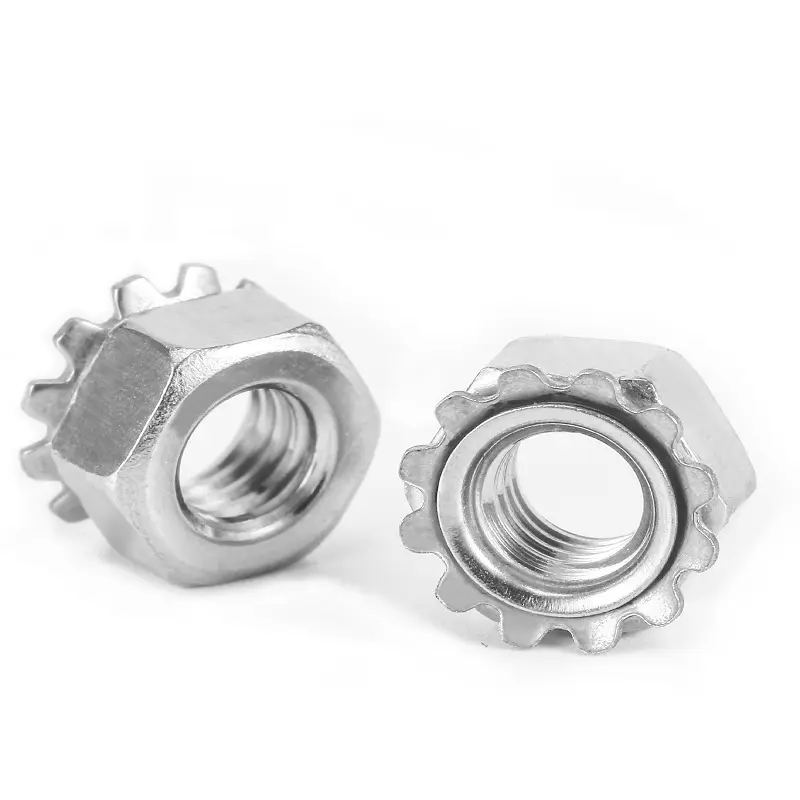
If you work with bolts, you know vibration and stress can loosen standard nuts, risking equipment failure and safety. A Kep lock nut solves this by resisting loosening. It typically features a non-circular deformed thread section that creates a tight friction fit on the bolt, providing reliable, reusable locking without extra parts. This simple design keeps critical joints secure in demanding environments.
A Kep lock nut is a type of prevailing torque nut engineered to resist loosening from vibration and torque. Historically linked to a brand that popularized the design, the term now commonly describes a reusable, self-locking nut that secures firmly in place without requiring additional components such as lock washers or adhesives.
How Does a Kep Lock Nut Work?
The locking action is ingeniously simple and built into the nut’s design. Unlike a standard hex nut, a Kep lock nut has a distinct section that provides the locking mechanism. Most commonly, this is achieved through a non-circular deformed thread or an integrated nylon collar .
Deformed Thread Design: A portion of the nut’s threads are slightly out of round or elliptical. As you thread the nut onto a bolt, these deformed threads create a controlled interference fit. This generates friction and a prevailing torque meaning extra force is required to turn the nut both on and off. This friction effectively “locks” the nut in place against rotational forces.
Key Advantages and Benefits
Why choose a Kep-style lock nut over other locking methods? The benefits are clear for maintenance, assembly, and engineering:
1.Excellent Vibration Resistance: They are specifically engineered to prevent loosening in high-vibration environments, in automotive, machinery, and structural applications.
2.Reusability: Unlike single-use locking methods (adhesives or crushed threads), a quality deformed thread lock nut can often be reused several times while still maintaining its locking effectiveness.
3.No Additional Parts Needed: They eliminate the need for separate lock washers, saving time in assembly and reducing part count in your inventory.
4.Predictable Performance: The prevailing torque is consistent, allowing for reliable clamping force in critical joints. They provide a secure all-metal lock without compromising strength.
5.Easy Identification: Their distinctive shape makes them easy to identify in a toolbox or parts bin.
Common Applications and Use Cases:
1.Automotive and Transportation: Securing parts on engines, chassis components, wheel assemblies, and in rail systems.
2.Industrial Machinery: Fastening motors, pumps, conveyor brackets, and guard rails on equipment that experiences constant vibration.
3.Electrical Enclosures and Panels: Keeping busbar connections, cable lugs, and panel components secure.
4.Fabrication and Structural Work: Used in steel frameworks, platforms, and safety railings where joint integrity is paramount.
5.Agricultural and Heavy Equipment: On tractors, harvesters, and construction machinery exposed to rough, jarring operation.
Selecting the Right Lock Nut for the Job
“Kep nut” is a common term, it’s important to select a lock nut based on your specific requirements:
1.Material and Grade: Ensure the nut material (medium carbon steel, stainless steel) and strength grade match or exceed that of the bolt to avoid compromising the joint.
2.Locking Style: Decide between all-metal deformed thread nuts (good for high temperatures and reusability) and nylon insert lock nuts (which provide a strong seal and excellent vibration resistance but may have temperature limitations).
3.Thread Type and Size: It must match the bolt’s diameter and thread pitch ( M10, 1/2″-13).
4.Environmental Factors: Consider exposure to moisture, chemicals, or extreme temperatures, which will influence material choice (stainless steel for corrosion resistance).
5.Application Criticality: For highly critical, safety-related, or sealed joints, always follow the original equipment manufacturer’s (OEM) specifications or consult an engineer.
Final Recommendations
A Kep-style lock nut is a simple yet profoundly effective solution for one of engineering’s oldest problems: keeping fasteners tight. Its value lies in its dedicated design, reliability, and time-saving reusability.
For your next project, assess the environment. If vibration, movement, or thermal cycling is present, a prevailing torque kep lock nut should be your go-to choice over a standard nut. Always torque it to the manufacturer’s recommended specification using a calibrated tool to ensure proper clamp load without damaging the locking feature. By understanding and correctly applying these versatile fasteners, you can build more durable, reliable, and safe assemblies.
Post time: Dec-23-2025