

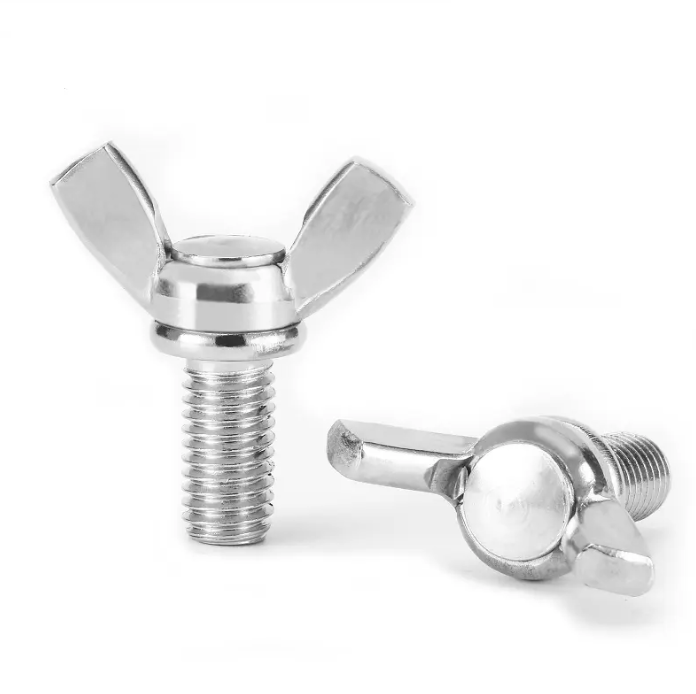
Ever struggled with needing a tool just to tighten or adjust a small fastener? Wing screws, also known as wing bolts or thumb screws, solve this exact frustration with their unique winged design that lets you operate them by hand. Whether you’re assembling furniture, maintaining machinery, or working on a DIY project, these specialized screws offer unmatched convenience in fastening. Let’s dive into what wing screws are used for, key insights about screws in general, and how to choose the right one for your needs.
Key Uses of Wing Screws: Where Convenience Meets Reliability
The primary advantage of a wing screw is tool-free operation—its two flat, wing-like extensions provide a secure grip for thumb and forefinger, making it perfect for scenarios where frequent adjustments or quick assembly/disassembly are needed. Here are the most common applications:
1. Furniture & Modular Systems: Flat-pack furniture, adjustable shelves, folding tables, and office chairs often rely on wing screws. They let users assemble or reconfigure pieces without tools, ideal for both home users and commercial furniture installers. No more hunting for a screwdriver when you need to adjust a shelf height or fold a table for storage .
2. Machinery & Equipment Maintenance: Industrial machinery, small appliances, and equipment with access panels use wing screws to simplify maintenance. Technicians can quickly remove covers for inspections or repairs without carrying extra tools, saving time and improving efficiency .
3. Electronics & Hobby Projects: Light-duty electronic devices and DIY/hobby projects benefit from wing screws. Their gentle yet secure fastening won’t damage delicate components, and their ease of use makes them popular among hobbyists .
4. Temporary & Adjustable Fastening: Any application requiring temporary joints—like exhibition displays, temporary enclosures, or prototype assemblies—uses wing screws. They can be reused multiple times without wear, reducing replacement costs .
A Brief History of the Screw: From Ancient Inventions to Modern Fasteners
The screw, a fundamental fastening device, has a rich history that dates back over 2,000 years. The ancient Greeks first conceptualized the screw principle for lifting water (the Archimedean screw), but it wasn’t until the Renaissance that screws were adapted for fastening. Early screws were hand-carved, making them rare and expensive. The Industrial Revolution changed everything: in the 18th century, machine tools standardized screw threads, making screws affordable and widely available. Today, screws come in thousands of types—including wing screws—each tailored to specific applications .
How Screws Are Made: From Raw Material to Finished Fastener
Understanding the production process helps buyers assess quality. Here’s a simplified breakdown of screw manufacturing, including wing screws:
1. Raw Material Selection: Common materials include carbon steel, stainless steel , brass, or plastic. Stainless steel is preferred for corrosive environments, while plastic is used for light-duty applications .
2. Cold Heading: Raw material (wire) is cut to length and formed into the screw head (including wing projections for wing screws) using high-pressure dies. This process ensures strength and consistency .
3. Thread Rolling: Threads are formed by rolling the screw shaft between two dies, creating stronger threads than cutting. For wing screws, this step ensures smooth, even threads that make hand adjustment easy .
4. Surface Treatment: Treatments like zinc plating, nickel plating, or passivation protect against corrosion. Stainless steel wing screws may undergo electrolytic polishing for a smooth finish .
5. Inspection & Packaging: Finished screws are inspected for size, thread quality, and strength. They’re then packaged in bulk or small quantities for retail or industrial use .
A Reliable Option for Corrosive Environments: QIANGBANG’s Stainless Steel DIN316 AF Wing Screw
For buyers seeking high-quality wing screws for harsh or corrosive environments, QIANGBANG’s Stainless Steel DIN316 AF Wing Bolt/Wing Screw/Thumb Screw stands out. Made from premium 316 stainless steel , this wing screw complies with DIN316 standards, ensuring compatibility with global applications. Its ergonomic wing design allows easy hand tightening, and the smooth thread rolling ensures long-term reusability. Suitable for marine equipment, outdoor furniture, and industrial machinery, it’s a reliable choice for applications where durability and convenience are non-negotiable.
How to Choose the Right Wing Screw for Your Needs
When selecting a wing screw, consider three key factors: material , size,and standard . Always choose a reputable brand to avoid issues like stripped threads or weak wing projections.
Wing screws are more than just convenient fasteners—they’re a solution for efficient, tool-free fastening in countless industries. From home DIY projects to industrial maintenance, the right wing screw saves time and ensures reliability. Whether you’re a hobbyist, furniture manufacturer, or maintenance technician, understanding their uses and quality factors helps you make the best purchase decision.
Post time: Dec-30-2025