

For engineers, buyers, and project managers working with industrial fasteners, DIN934 hex nuts are the backbone of countless assemblies—but their performance lives or dies by the right stainless steel coating. Choosing the wrong finish can lead to corrosion failures, costly rework, or non-compliance with strict industry standards. This guide cuts through the noise to connect DIN934’s core properties with coating solutions that solve real-world challenges, from harsh marine environments to food-grade applications.
What Is DIN934? The Industry Standard Unpacked
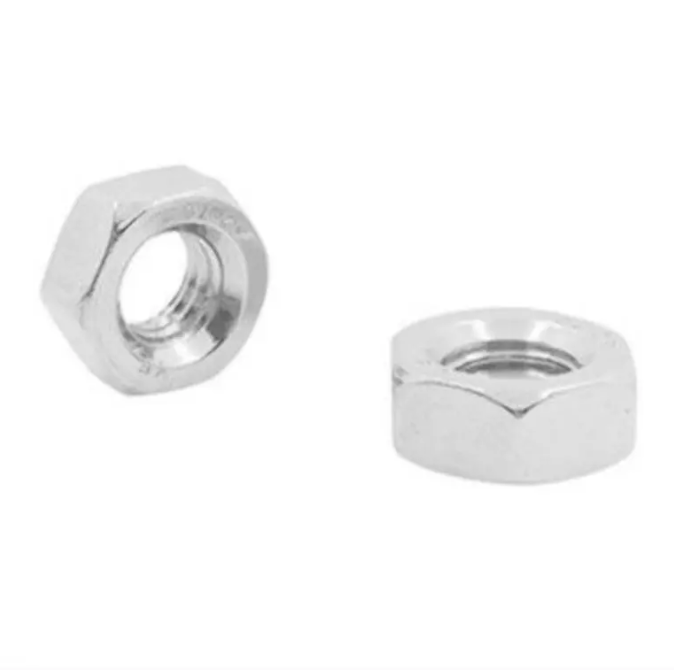
DIN934 is a widely adopted German industrial standard for hexagon nuts, equivalent to ISO 4032 and closely aligned with GB/T 6170 for most specifications. Used across automotive, construction, chemical, and marine sectors, these nuts are designed for universal compatibility with bolts and screws, with defined thread tolerances and mechanical performance grades—A2-70 and A4-70 for stainless steel variants up to M39 size. Unlike specialized fasteners, DIN934’s ubiquity makes it a cost-effective choice, but its versatility demands coatings tailored to specific operating conditions.
Key Industry Challenges DIN934 Coatings Solve
The fastener industry faces intense competition, tightening environmental regulations, and supply chain volatility—all of which impact how DIN934 nuts are specified and protected. Corrosion is the top pain point: even stainless steel DIN934 nuts can succumb to stress corrosion cracking in chloride-rich environments or wear in high-friction applications. Additionally, buyers must balance performance with sustainability, as traditional hexavalent chromium coatings are phased out in favor of eco-friendly alternatives.
Stainless Steel Coating Options for DIN934 Nuts
Not all coatings are created equal—selecting the right one depends on your environment, compliance requirements, and budget. Here are the most reliable solutions for DIN934 fastening systems:
Passivation: Cost-Effective Corrosion Resistance
Passivation is a chemical process that enhances stainless steel’s natural oxide layer, creating a dense Cr₂O₃ film that blocks corrosion. Ideal for general industrial use, food processing equipment, or medical devices, it adds no thickness to DIN934 nuts and meets eco-friendly standards. Passivated DIN934 nuts can withstand 1,000+ hours of salt spray testing, making them a low-cost, high-value choice for non-extreme environments.
PVD Coating: Durability for High-Wear Scenarios
Physical Vapor Deposition applies thin, hard coatings like TiN or CrN in a vacuum environment. For DIN934 nuts used in automotive, aerospace, or tooling applications, PVD boosts wear resistance while maintaining dimensional accuracy. When combined with pre-passivation, it delivers exceptional performance in marine or chemical settings—perfect for projects where longevity and reliability are non-negotiable.
Eco-Friendly Alternatives:Dacromet & Geomet
As environmental regulations tighten, hexavalent chromium-free coatings like Dacromet and Geomet have become industry staples for DIN934 systems. These zinc-aluminum composite coatings offer 500-1,000 hours of salt spray resistance, no hydrogen embrittlement risk, and compatibility with stainless steel. They’re ideal for outdoor infrastructure, marine fasteners, and automotive components, balancing compliance with long-term performance.
How to Choose the Right Coating for Your DIN934 Application
Start by assessing your operating environment: prioritize passivation for dry, indoor settings; PVD for high-wear or high-precision applications; and Dacromet/Geomet for coastal, industrial, or eco-regulated projects. Next, verify compliance with local standards to avoid supply chain delays. Finally, work with a supplier who understands DIN934’s dimensional constraints—coating thickness must not compromise thread fit, especially for tolerance class 6H nuts.
The Future of DIN934 Coating: Sustainability & Innovation
The fastener industry’s shift toward digitalization and green manufacturing is shaping DIN934 coating trends. Manufacturers are investing in automated coating processes to improve consistency, while(R&D) focuses on thinner, more durable eco-coatings. For buyers, this means better performance at lower costs—but it also requires partnering with suppliers who stay ahead of regulatory and technological changes to ensure your DIN934 fastening systems remain reliable and compliant.
Whether you’re specifying DIN934 nuts for a construction project, chemical plant, or automotive assembly, the right stainless steel coating turns a standard component into a long-term solution. By aligning coating choice with your environment and industry needs, you’ll avoid costly failures and keep projects on track.
Post time: Jan-22-2026