

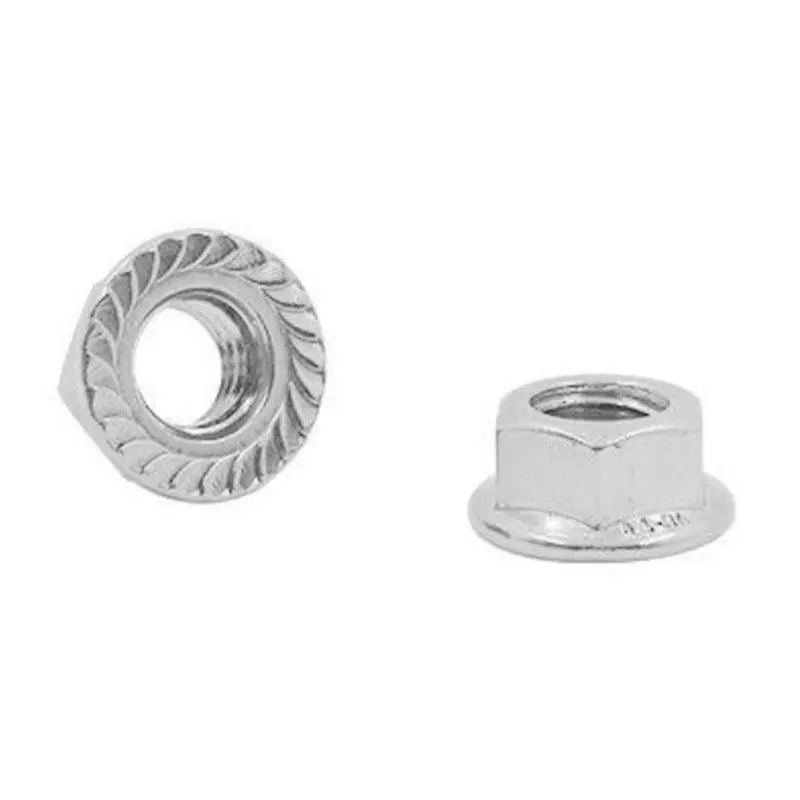
A common question in construction and manufacturing is: are stainless steel nuts strong? The answer is yes, but their strength is best understood as a balance. While not always the hardest, their real power lies in exceptional corrosion resistance from chromium alloys. This means a stainless steel nut maintains its integrity and clamping force in wet, chemical, or salty environments where ordinary steel would rust and fail, making it stronger over the long term.
Key Strengths and Benefits
1.Corrosion Resistance is Their Primary Strength: This is their standout feature. They resist rust, staining, and deterioration from moisture, chemicals, and salt spray. This makes them immensely strong in terms of long-term reliability in harsh environments.
2.Good Mechanical Strength: Common grades like 304 and 316 stainless steel provide excellent tensile strength and yield strength for the vast majority of applications, from construction and automotive to marine and food processing.
3.Durability and Longevity: They do not require plating or coatings, which can chip or wear off. Their strength and appearance are consistent throughout the material.
4.Temperature Resistance: They maintain their mechanical properties better than many materials across a wide temperature range.
Understanding the Trade-offs and Best Uses
It’s important to know that some stainless steel grades can be susceptible to galling (a form of wear where materials cold-weld under friction). This can be mitigated by using proper lubrication, different alloys, or stainless steel nuts with anti-seize coatings.
Ideal applications for stainless steel nuts capitalize on their corrosion resistance:
1.Outdoor & Architectural: Railings, facades, and structures exposed to weather.
2.Marine & Coastal: Boat fittings, docks, and any application near saltwater.
3.Food & Beverage and Pharmaceutical: Where sanitation and resistance to cleaning chemicals are mandatory.
4.Chemical Processing: In plants where exposure to corrosive substances is routine.
For projects involving very high, constant tension (like structural steel in a skyscraper), engineers might specify high-strength alloy steel. However, for an enormous range of uses where environmental durability is a factor, stainless steel nuts provide a “strong enough” solution that is, in fact, stronger over the lifespan of the project due to its resistance to environmental decay.
Always match the stainless steel nut grade (e.g., 304, 316, 18-8) to your environment and ensure it is compatible with the bolt material to prevent galvanic corrosion. When selected correctly, stainless steel nuts offer a powerful combination of mechanical strength and enduring resilience.
Post time: Dec-25-2025